Quick answer: Garden color feels intentional when it is planned around the fixed colors already at your home, repeated through the planting, and supported by foliage and structure when flowers are not in bloom. Start with a small palette, then build contrast and seasonal change around it.
Begin with the colors you cannot change
Your house, front door, roof, paving, fence, and mature trees are already part of the color scheme. Stand at the curb and look at those fixed elements before choosing plants. A warm brick facade may feel balanced with deep greens, soft golds, and blue-violet flowers. A cool gray or white exterior can support bolder foliage or a more limited monochrome planting. There is no universal “best” color palette; the strongest palette is one that belongs to the place.
Also notice how the garden is seen. A planting viewed from a moving car needs larger repeated blocks of color. A bed beside a front walk can carry more detail because people see it up close.
Choose a simple palette and repeat it
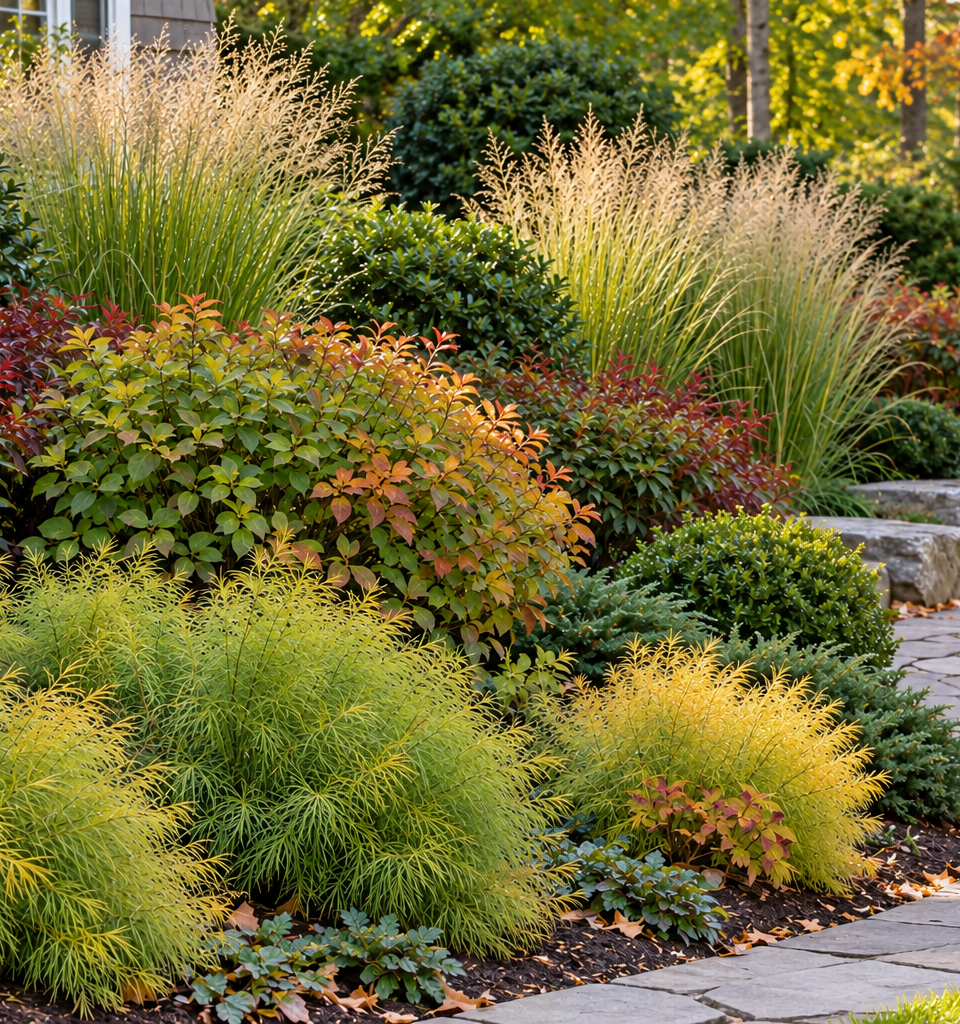
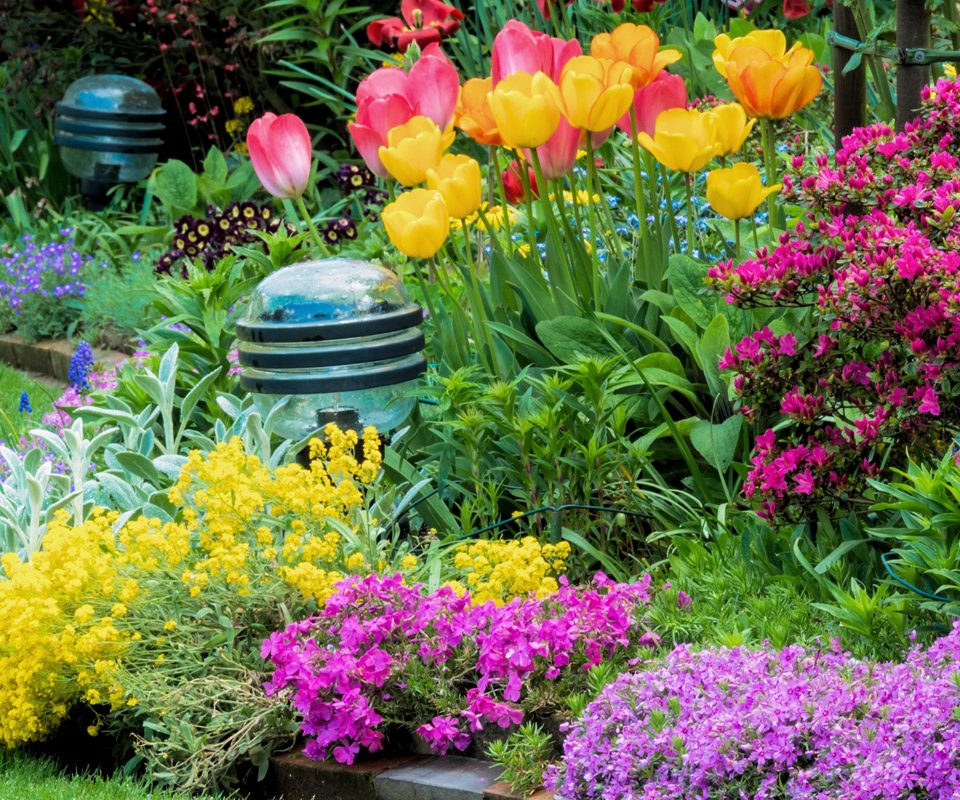
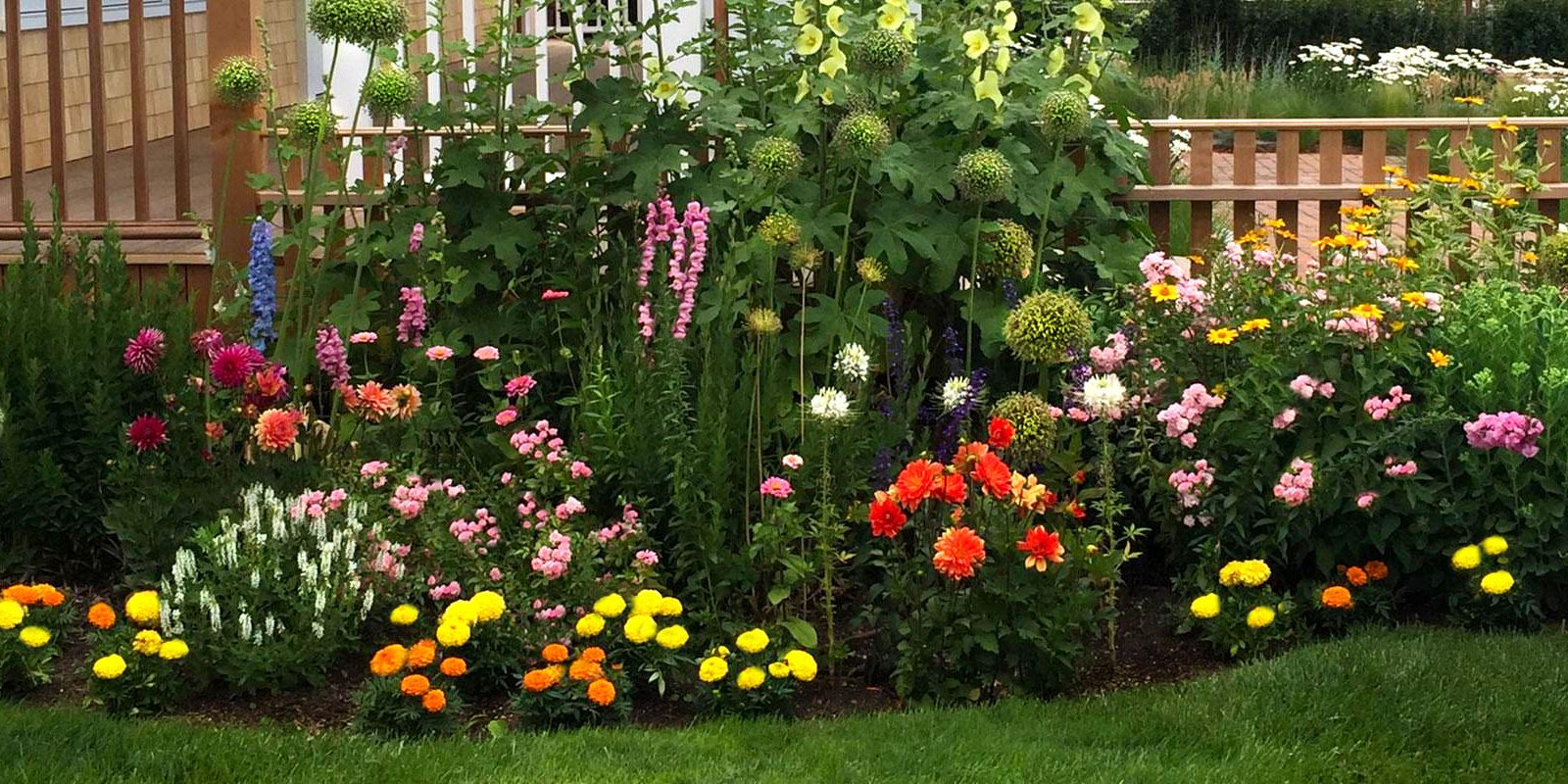
Limit the main palette to two or three colors, then use green, silver, burgundy, or chartreuse foliage as connectors. Repetition is what makes a bed feel designed. Instead of placing one red flower, one purple flower, and one yellow flower wherever there is an empty spot, repeat groups of each color at intervals. The eye will read the pattern even as individual plants change through the season.
- Use one color as the dominant note and one or two as accents.
- Repeat a foliage color as often as a flower color.
- Use white and pale flowers to create a pause between stronger colors.
- Keep the boldest color near the entry, seating area, or view you want to emphasize.
Do not feel locked into a color wheel. A garden should suit the home and the people who use it. The goal is coherence, not a formula.
Plan for foliage and bloom timing
Flowers are only one layer of garden color. Evergreen structure, spring leaves, variegated foliage, seed heads, bark, and fall color make a planting feel complete when a favorite perennial is between bloom cycles. When choosing plants, ask when the foliage looks its best, not just what the flower looks like in a catalog photo.
Build an overlapping sequence: a few early-season flowers, summer anchors, and late-season plants that carry color into fall. Add plants with reliable foliage near those that have a brief but dramatic bloom. This keeps the garden from looking empty after one strong moment.
Connect the entrance, paths, and garden beds
A single container or front-door planting can connect the house to the larger garden. Repeat a color from the entry in a nearby border, then carry one foliage tone toward the sidewalk or driveway. Use lower, well-behaved plants near paths so the garden frames the route instead of blocking it. In dry or difficult locations, select plants for the conditions first and color second; a stressed plant is not a long-term design solution.
For a better way to turn your ideas into a complete planting direction, see how garden visualization supports planting plans.
Edit before you add more
Color planning is often about subtraction. Remove a struggling plant, a random one-off color, or an overcrowded clump before buying more. Take photos from the curb at several points in the season and note where the garden fades, feels busy, or needs more structure. Those notes will tell you whether the next addition should be a shrub, a mass of one perennial, a container, or simply more open space.
Measure the bed, photograph the house and entry, and use  Dirt AI to explore a color-led garden plan before committing to a full cart of plants.
share this article